
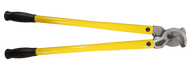
Paprsky Heavy Cable Cutters | PT-HCC-275
Posted by Paprsky Energy on 3rd Jun 2026
Precision Mechanical Shearing for Large-Diameter Conductors
In electrical contracting, utility grid maintenance, and heavy industrial panel building, the physical preparation of large-diameter distribution cables is a highly demanding task. Standard manual cutters often require immense physical exertion and frequently crush or deform the conductor profile during the shearing process, leading to poor terminal fitment and increased electrical resistance. The Paprsky PT-HCC-275 Heavy Cable Cutters provide a professional-grade manual solution engineered for high-leverage precision. Designed to cleanly slice through thick copper and aluminum lines, this tool minimizes operator fatigue while preserving the exact geometric shape of the cable for flawless downstream termination.
Double-Lever Transmission and Precision Blade Architecture
To overcome the immense structural resistance of heavy-gauge solid and stranded conductors, the PT-HCC-275 utilizes an advanced double-lever transmission mechanism. This internal mechanical configuration exponentially amplifies the operator's applied hand force, transferring massive cutting power directly to the jaws. As depicted in the product profile in image_a3c67d.png, the tool is constructed with extended, high-visibility yellow handles culminating in ergonomic grips, maximizing the physical leverage available to the technician.
The cutting head is equipped with specialized, heavy-duty blades featuring a reusable and replaceable knife edge. This curved blade geometry is specifically designed to encircle the cable, delivering a smooth, shearing cut that pulls the conductor inward rather than flattening it, ensuring the core remains perfectly round and ready for lug insertion.
High-Capacity Processing and Material Restrictions
This industrial-grade cutter is calibrated to manage substantial electrical infrastructure runs. It boasts a massive maximum cutting area capacity of up to 500mm², seamlessly handling thick primary power feeds and heavy distribution lines. Despite this immense capacity, the tool maintains a manageable weight of exactly 3.2 kilograms. Combined with its 750-millimeter overall length, the cutter provides an optimal balance of structural mass and extended reach, allowing operators to maneuver effectively within deep switchgear cabinets or elevated utility trenches.
Crucial Operational Restriction: The PT-HCC-275 is engineered exclusively for soft, highly conductive metals, specifically copper and aluminum conductors. It is strictly prohibited for use on steel wire, wire ropes, or Aluminum Conductor Steel Reinforced (ACSR) lines. Attempting to cut hardened steel will instantly shatter or permanently deform the precision knife edge.
Streamlining High-Capacity Cable Splicing
-
Double-Lever Transmission: Advanced mechanical linkage amplifies manual force, drastically reducing the physical effort required for heavy cuts.
-
Deformation-Free Shearing: Specialized curved blade architecture slices cleanly through thick conductors without crushing the internal wire strands.
-
Extended Structural Leverage: The 750-millimeter handle length provides maximum mechanical advantage and excellent operational reach.
-
Reusable Knife Edge: Precision-forged blades offer exceptional durability and can be replaced or re-sharpened for a prolonged service lifecycle.
-
Optimized Weight Distribution: At 3.2 kilograms, the tool offers the necessary heft for stability while remaining manageable for continuous field work.
Target Applications Across Electrical Infrastructure
-
Industrial Panel Building: Preparing massive primary cables for precise termination inside commercial switchgear and control cabinets.
-
Electrical Installation: Slicing through main power feeds, heavy distribution cables, and localized factory wiring runs.
-
Utility Grid Maintenance: Repairing and replacing heavy-gauge overhead service lines or underground aluminum distribution loops.
-
Renewable Energy Plants: Managing large-diameter copper collection cables in solar farm inverter stations and wind turbine bases.
Operational Strategies for Manual Cable Cutting
To ensure a pristine cut and maximize the lifespan of the tool, electrical technicians must follow strict operational guidelines. Always seat the target cable as deeply into the curved jaw nest as possible before applying pressure; cutting near the tips of the blades reduces mechanical leverage and places asymmetric stress on the pivot bolt. Because this tool relies on a razor-sharp shearing action, operators must strictly audit the cable type before cutting to ensure no hidden steel messenger wires or armor layers are present. Finally, periodically lubricate the double-lever linkage joints with high-viscosity machine oil to maintain smooth transmission and prevent binding during repetitive, high-capacity industrial installations.