
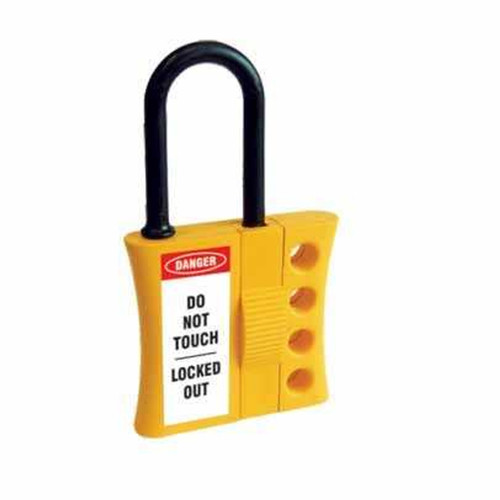
The Paprsky Electric Slider Hasp (PS-LOTO-HASP-SLIDE6) is a specialized Lockout/Tagout (LOTO) safety device designed for securing electrical panels and Miniature Circuit Breakers (MCBs). Constructed from durable Hard Nylon and ABS materials, this hasp allows multiple workers to lock out a single energy source simultaneously. With a 6mm shackle and capacity for up to 4 padlocks, it is a crucial tool for ensuring safety compliance during maintenance or repair of electrical equipment.
Specifications
| LOTO Model | PS-LOTO-HASP-SLIDE6 |
| Material | Hard Nylon / ABS |
| Ideal for |
Electric Panels, MCBs |
| Holes | 4 |
| Shackle Dia (mm) | 6 |
| Hasp Body Height (mm) | 105 |
| Hasp Body Width (mm) | 61 |
| Jaw Size (mm) | 21/43 |
Key Features
- Multi-Worker Safety: Accommodates up to 4 safety padlocks, allowing multiple personnel to securely lock out a single energy source.
- Non-Conductive Build: Constructed from Hard Nylon and ABS, reducing electrical hazards and making it safe for electrical panel use.
- Slider Mechanism: Designed as a slider hasp for smooth and effective application on circuit breakers.
- Optimal Sizing: The 6mm shackle and compact body (105x61mm) are precisely engineered for tight electrical enclosures.
Applications
- Electrical Maintenance: Specifically ideal for isolating and securing Electric Panels during maintenance.
- Circuit Breaker Lockout: Perfectly suited for safely locking out MCBs (Miniature Circuit Breakers).
- Group Lockout/Tagout: Used in scenarios where multiple workers or contractors are working on the same electrical equipment and require independent lockout points.
Paprsky Energy provides high-quality, durable Lockout/Tagout (LOTO) solutions engineered to keep workers safe. By offering specialized tools like the Electric Slider Hasp, Paprsky ensures that facilities can maintain strict safety standards and protect their personnel from accidental energization when working on critical electrical infrastructure.